- IGCSE Courses
- Biology IGCSE
- Business IGCSE
- Chemistry IGCSE
- Economics IGCSE
- English IGCSE
- English Literature IGCSE
- French IGCSE
- Geography IGCSE
- German IGCSE
- History IGCSE
- Human Biology IGCSE
- Maths IGCSE
- Physics IGCSE
- Science (Double Award) IGCSE
- Science (Single Award) IGCSE
- Spanish IGCSE
- GCSE Courses
- GCSE Business
- GCSE English
- GCSE English Literature
- GCSE Latin
- GCSE Maths
- GCSE Psychology
- GCSE Sociology
International GCSE Physics Key Facts
- PRICE: £375
- TIME REQUIRED: 200 hours
- EXAMS: Summer and Winter
- SPECIFICATION: Pearson/Edexcel 4PH1
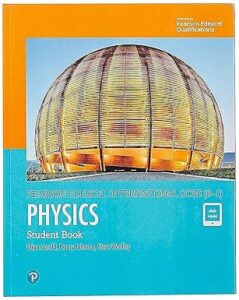
Physics IGCSE
The course is designed to develop
- A broad understanding of facts, concepts and principles,
- Skills in physical investigation and
- An ability to evaluate the benefits and drawbacks of modern scientific developments.
The International GCSE Physics course is an ideal preparation for those who wish to go on to study Physics, or other scientific subjects, at A-level. The course is designed to be accessible to students who may have only a limited previous background in science.
The Oxford Open Learning Trust’s international GCSE Phsyics course is designed to follow the structure of the Edexcel 4PH0/4PH1 specifications and is divided into seven modules, as follow:
- Module 1: Forces and Motion
- Module 2: Electricity
- Module 3: Waves
- Module 4: Energy Resources and Energy Transfer
- Module 5: Solids, Liquids and Gases
- Module 6: Magnetism and Electromagnetism
- Module 7: Radioactivity and Particles
The practical work described at various places in this course helps you to develop your skills for the practical-based components of the theory exams. It is not essential to carry out this work yourself, but if you can undertake some of it at home, or have the opportunity to perform supervised laboratory work in the course of your studies, this will be a great help. Students will need to access the internet to carry out some of the course activities.
The Oxford Open Learning international GCSE Physics course has been developed to meet the requirements of Physics IGCSE Edexcel Syllabus 4PH1 for exams in Summer 2022 and beyond.
Exams in Summer 2022 and beyond (4PH1):
- Paper 1 : 2 hours, 61% of the overall marks.
- Paper 2: 1 hour and 15 minutes, 39% of the overall marks.
This course will be graded using the new 9-1 grading system.
Online Course? Paper Based? Somewhere in between? It’s your choice!
All of our International GCSE Physics students receive:
- Traditional printed learning materials
- Access to our online resources with on-the-go access to all your regular lessons
- Unmatched support by a fully qualified teacher online and by phone

Supporting Resources
Physics IGCSE FAQs
The international GCSE Physics is of the same level as a GCSE and is examined by Edexcel, one of the UKs most trusted examination boards. A key difference is that IGCSE Physics does not include practical course work, making it convenient for distance learners. The Physics International GCSE qualification is accepted as at least the equivalent of GCSE in UK sixth form colleges, FE colleges, universities and other HE institutions.
The course costs £375. Click for full details of The Oxford Open Learning Trusts GCSE and international GCSE prices
The Oxford Open Learning courses which are enriched by Twig include extensive links to appropriate films (and other supporting material), lesson by lesson. The student hops from the course materials to the films and back again. To access the films, students need a special password, supplied at enrolment. Students also need internet access and an e-mail account to benefit from this extraordinary resource which is offered as a “free” extra to students on the relevant courses.
